The Life of Jane Austen exhibition
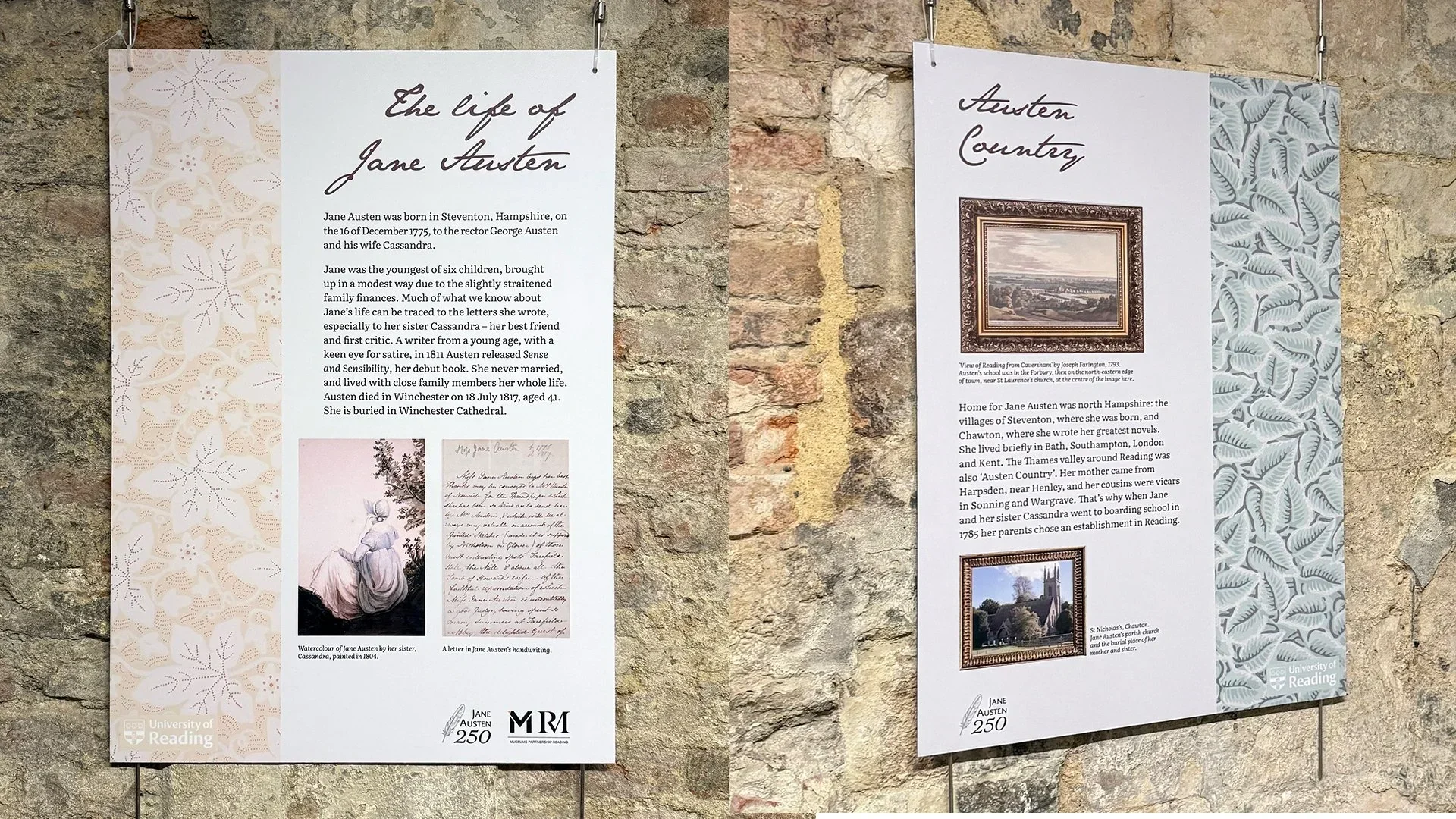
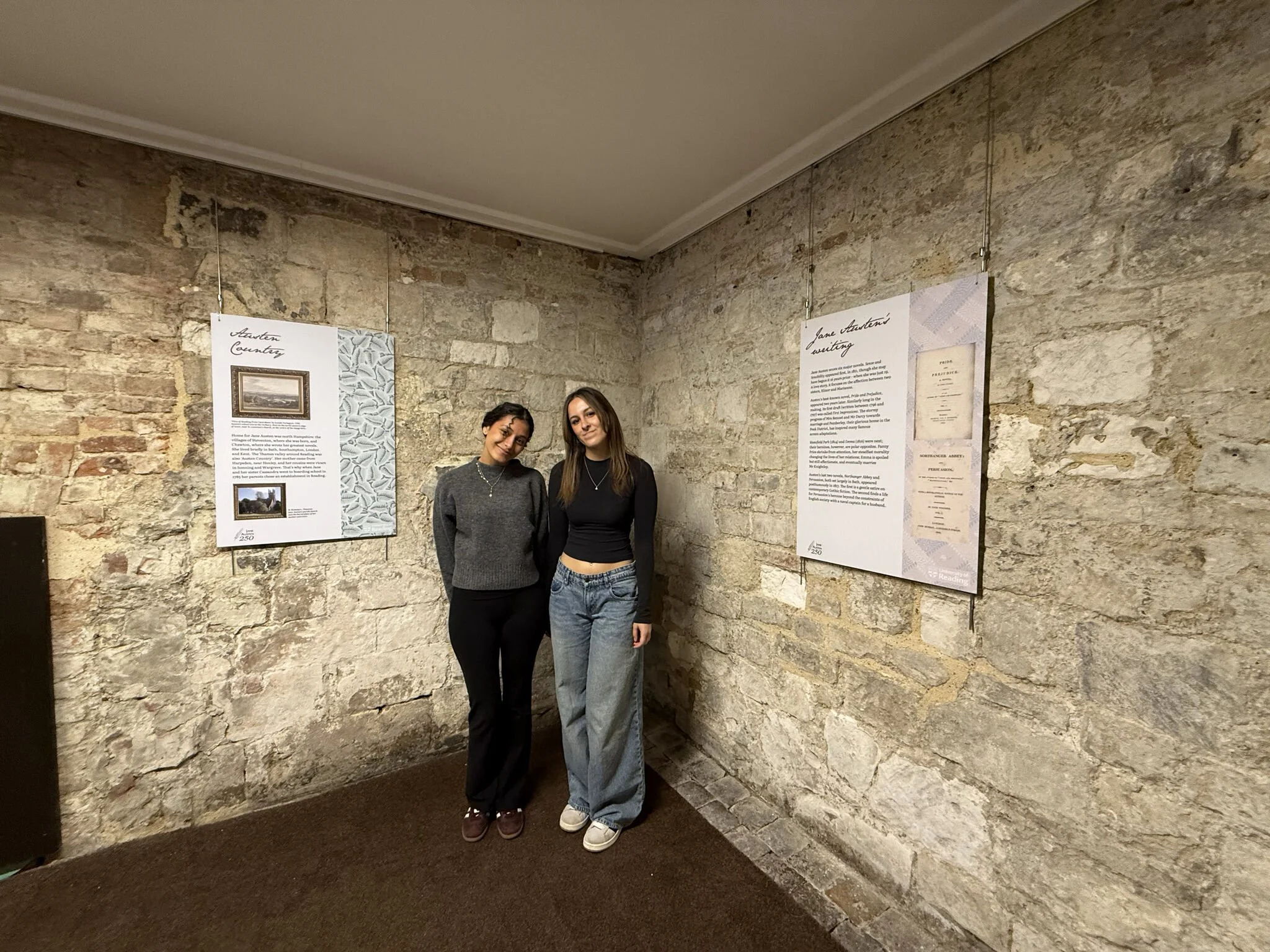
Working alongside the Reading Museum and the English Department to celebrate the 250th anniversary of the birth of Jane Austen. This celebration would consist of six A1 information boards and pull up banners with text provided by the English students. Reading has many connections to Jane Austen and her family, the boards would be displayed at the Abbey Quarter and Abbey Gatehouse where Jane and her sister attended school.
Research
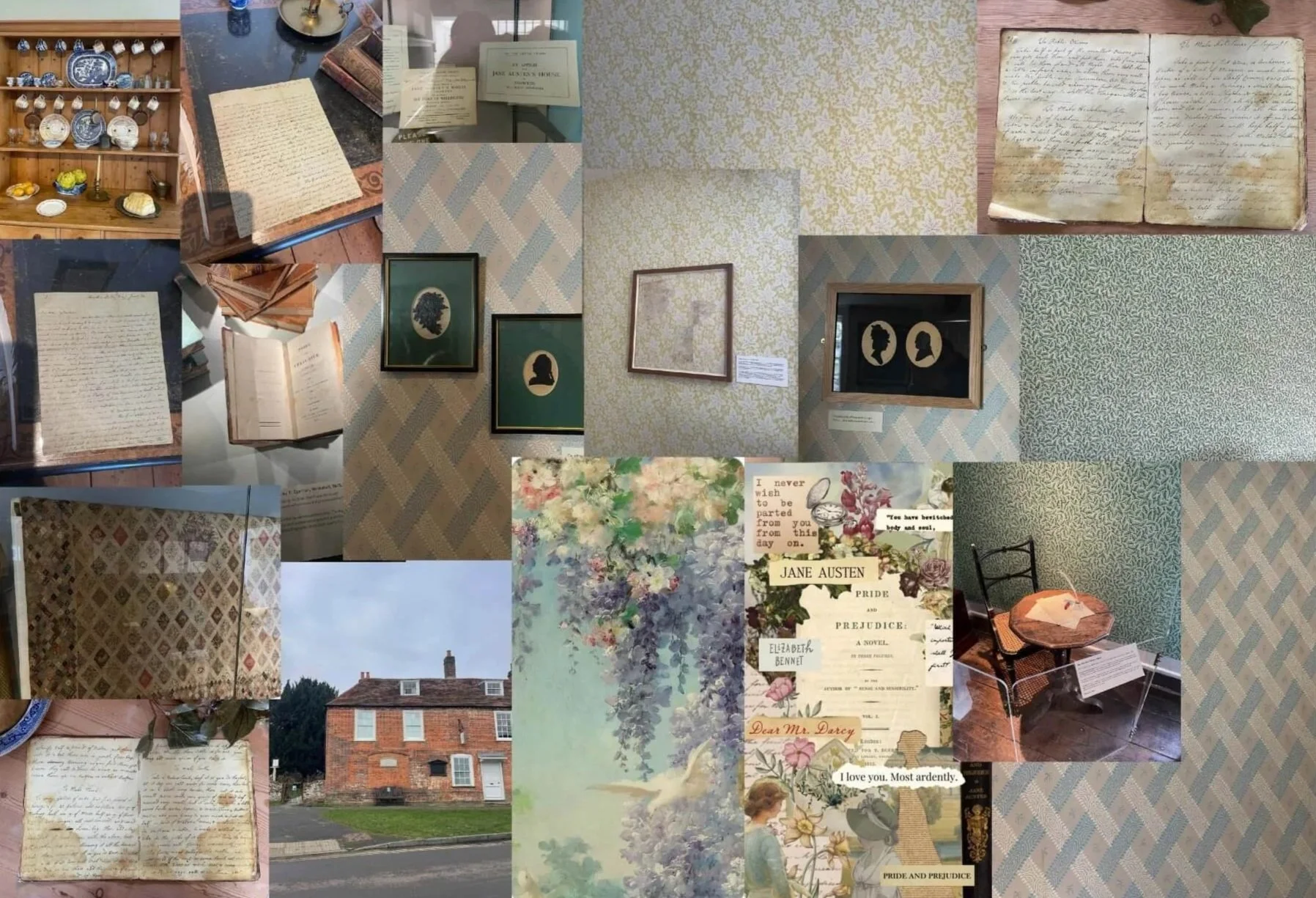
Initial research included a visit to Jane Austen’s House in Chawton, where Jane Austen spent the final eight years of her life. This provided valuable insight into the visual aesthetic of the Regency period and a greater understanding of the architecture of the time. Particular inspiration was drawn from the colourful wallpaper used throughout the house. The research also included observing mannequins displaying garments and jewellery that would have been worn by Jane Austen and her sister, consisting of delicate silks and finely embroidered muslins. Additionally, viewing Jane Austen’s original handwritten letters revealed that typography during this period was predominantly handwritten. Her handwriting, characterised by its lively yet elegant calligraphic
style, was identified as a key source of inspiration and a visual element that could be incorporated into the final designs.
Outcome
The outcome of the information boards were produced and installed by the museum itself. As seen below they are hung on a brick wall in Reading Museums Abbey Gatehouse. The typeface of the title incorporates Jane Austen’s handwriting, inspired by the books and letters stored at Chawton House.
“Your professionalism has been evident from the start, your communications with us timely, polite, and well-informed, and the work itself is stunning. We’ve been particularly impressed by your commitment to the project, most notably in taking the time to visit Chawton. This trip has proved really decisive in ensuring the quality and distinctiveness of the final product, and it will tell in ensuring that visitors to the Schoolroom get a much more tangible sense of Austen’s period, and her own life. You’ve been very responsive to the project brief, and to our suggestions as the work has progressed, and you’ve communicated very clearly the parameters within which you’re working, and the practical considerations that we need to bear in mind. It’s been a real pleasure to work with you. Thank you both very much.”
— Paddy and Gail, English department of University of Reading.